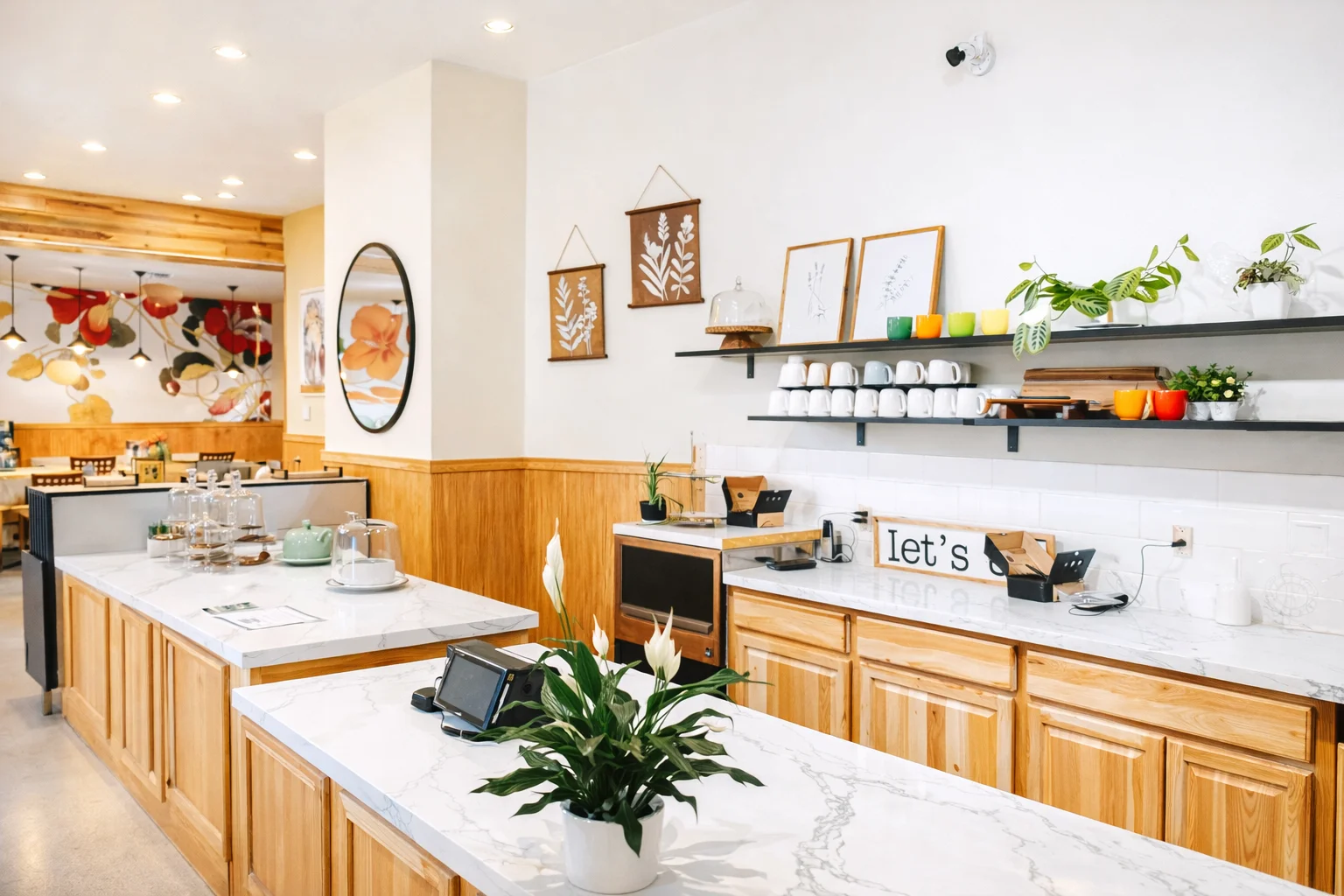
Your first shift in a shared kitchen is a little like your first day at a new job.
You know how to cook. What you don’t know yet is where things live, who’s sharing the space, and how long everything really takes when you’re working somewhere unfamiliar.
That’s where a bit of planning pays off. Members who prepare well finish early, leave clean, and book again with confidence.
This guide covers what to prepare before your first shared-kitchen shift, from your prep list to your cleanup, so your time in the kitchen is spent cooking, not scrambling.
Jump To:
- Detailed Breakdown
- Know Exactly What You Are Making
- Build a Prep List and a Run-of-Show
- Plan Your Block Length Honestly
- Know Your Crew Size
- Bring Your Documents
- Pack What You Need, Ask About the Rest
- Label, Date, and Store Everything
- Be a Good Neighbor
- Share Equipment Like a Pro
- Leave It Ready for the Next Person
- Take Notes for Next Time
- Book Early and Plan Ahead
- Common Mistakes to Avoid
- Key Takeaways
- FAQs
TLDR – Quick Guide
Before your first shared-kitchen shift, work through this list:
- Write a prep list and a simple timeline for your block
- Decide who is working and what each person is doing
- Bring your documents, labels, and the tools you trust
- Label, date, and seal everything you store
- Tell the kitchen about strong odors, heavy smoke, or specialty methods before you book
- Leave your stations clean and ready for the next person
If you’re still choosing a kitchen, start with our commercial kitchen rental page to see how scheduling and onboarding work.
Detailed Breakdown
Know Exactly What You Are Making
A shift goes best when you know the finish line before you start.
Write down what you’re producing, how much, and in what form. A batch of forty meal-prep boxes is a different day than three trays of cookies and a catering order.
- Each product and its quantity
- Packaging and labeling for each item
- What needs to cool, rest, or chill before packing
- Your delivery or pickup deadline
This is also the moment to spot anything the kitchen needs to approve in advance, like strong-odor or high-smoke cooking.
Build a Prep List and a Run-of-Show
Experienced members work from a timeline, not from memory.
Break your block into stages and give each a rough time:
- Setup: unload, wash hands, set up stations, gather ingredients
- Prep: chopping, measuring, mixing, anything that doesn’t need heat
- Cook: stovetop, oven, and anything on a timer
- Cool and pack: portioning, labeling, and sealing
- Clean-down: dishes, surfaces, floors, and trash
Put the long-wait items first, such as things that bake, simmer, or need to cool, so you can prep other tasks while they work.
Plan Your Block Length Honestly
Most members book production blocks of about four to six hours. Longer blocks are sometimes available depending on the schedule.
Your first shift will almost certainly run slower than your home kitchen estimate. You’re finding equipment, learning the layout, and cooking at a larger scale. Build in extra time and then tighten the plan as you learn.
Remember that cleanup counts. Plan to spend the final part of your block washing and resetting, not cooking.
Know Your Crew Size
Kitchen reservations are designed for a small team, and ours are set up for up to three kitchen workers at a time.
Decide ahead of time who is coming and what each person is responsible for. The goal is to avoid people waiting on one station or crowding each other at the same sink.
- Give each person a clear set of tasks
- Assign one person to dishes and cleanup throughout, not only at the end
- Make sure everyone who handles food has a current Food Worker Card
Bring Your Documents
Having everything in one folder saves time on day one.
- Your Washington business license
- Your food-business permit or WSDA approval, as applicable
- Food Worker Cards for everyone working your shift
- Your certificate of commercial general liability insurance
A kitchen will confirm exactly what applies to your menu during onboarding, but arriving with documents ready makes you look prepared and gets you cooking faster.
Pack What You Need, Ask About the Rest
Shared kitchens usually provide major equipment, but members commonly bring their own small items.
Ask the kitchen what is provided, then pack the tools you trust:
- Knives and small hand tools you prefer
- A probe thermometer
- Labels, date stickers, and permanent markers
- Storage containers and lids
- Packaging for finished product
- Aprons, hair restraints, and gloves
A short packing list you reuse every week turns this into a five-minute task.
Label, Date, and Store Everything
Storage rules in a shared kitchen are strict for good reason. Everything stored on site should be labeled, dated, sealed, and kept in your assigned area.
A good label includes:
- Your business name
- What the item is
- The date it was made or received
- Any allergen information you want visible
Unlabeled or unassigned items usually get set aside, and some kitchens do not allow unapproved overnight storage at all. Treat labeling as part of the job, not an afterthought.
Be a Good Neighbor
In a shared kitchen you’re working alongside other members, and often a café as well. What you do affects everyone.
If your process creates any of the following, tell the kitchen before you book:
- Strong odors, such as fermenting or heavy spice work
- Heavy smoke or a lot of grease
- Unusual waste or large volumes of trash
- Allergen cross-contact concerns
Some methods need advance approval or specific time slots. It’s much easier to sort out in a quick conversation than on the morning of your first shift.
Leave It Ready for the Next Person
Cleanup is where members earn their reputation.
- Wash, rinse, sanitize, and put away your dishes and tools
- Wipe down prep surfaces, stove tops, and any equipment you used
- Sweep and mop your work area
- Take out your own trash and recycling
- Wipe and organize your storage spot
- Do a final walk-through before you leave
Build the cleanup into your timeline from the start so it doesn’t get squeezed out when the cook runs long.
Take Notes for Next Time
The best members get faster every week because they write things down.
After your first shift, jot down what ran long, what you forgot, and what you’d change. Update your prep list and your packing list while it’s fresh.
Within a few weeks you’ll have a routine that makes your production predictable, which is exactly what a recurring block is for.
Book Early and Plan Ahead
Timing matters when you’re trying to get a recurring slot.
- For recurring schedules, reach out two to four weeks before your desired start date
- For one-time or extra production time, request at least seven days ahead
- Availability is always subject to existing member reservations
If you’re ready to start, send us a quick inquiry and tell us what you make. You can also find Corie’s Cafe in Duvall to plan your visit.
Common Mistakes to Avoid
Before and during your first shift, avoid these mistakes:
- Arriving without a prep list or a timeline
- Underestimating how long cooking at a larger scale takes
- Forgetting labels, markers, or containers
- Leaving items unlabeled or undated in storage
- Starting strong-odor or high-smoke cooking without approval
- Running out of time for cleanup
Each of these is easy to prevent with a short checklist and one conversation before you book.
Key Takeaways
A great first shift is mostly decided before you walk in.
- Plan your products, quantities, and timeline in advance
- Match your crew and tasks to the space and the schedule
- Bring your documents and a reusable packing list
- Label, date, and seal everything you store
- Tell the kitchen about odors, smoke, or specialty methods early
- Always leave your stations clean for the next member
Do these things consistently and the kitchen becomes a smooth, predictable part of your week.
FAQs
4. How many people can work in the kitchen at once?
It depends on the kitchen. Ours is designed for up to three kitchen workers at a time per reservation, which keeps stations from getting crowded.
5. What if my cooking is smoky or strongly scented?
Tell the kitchen before you book. Methods that create persistent odors, heavy smoke, or a lot of grease may need advance approval or specific time slots so they work alongside other members and the café.
6. How far ahead do I need to book?
For recurring schedules, two to four weeks before your desired start date is ideal. One-time or extra production time should generally be requested at least seven days ahead, subject to availability.