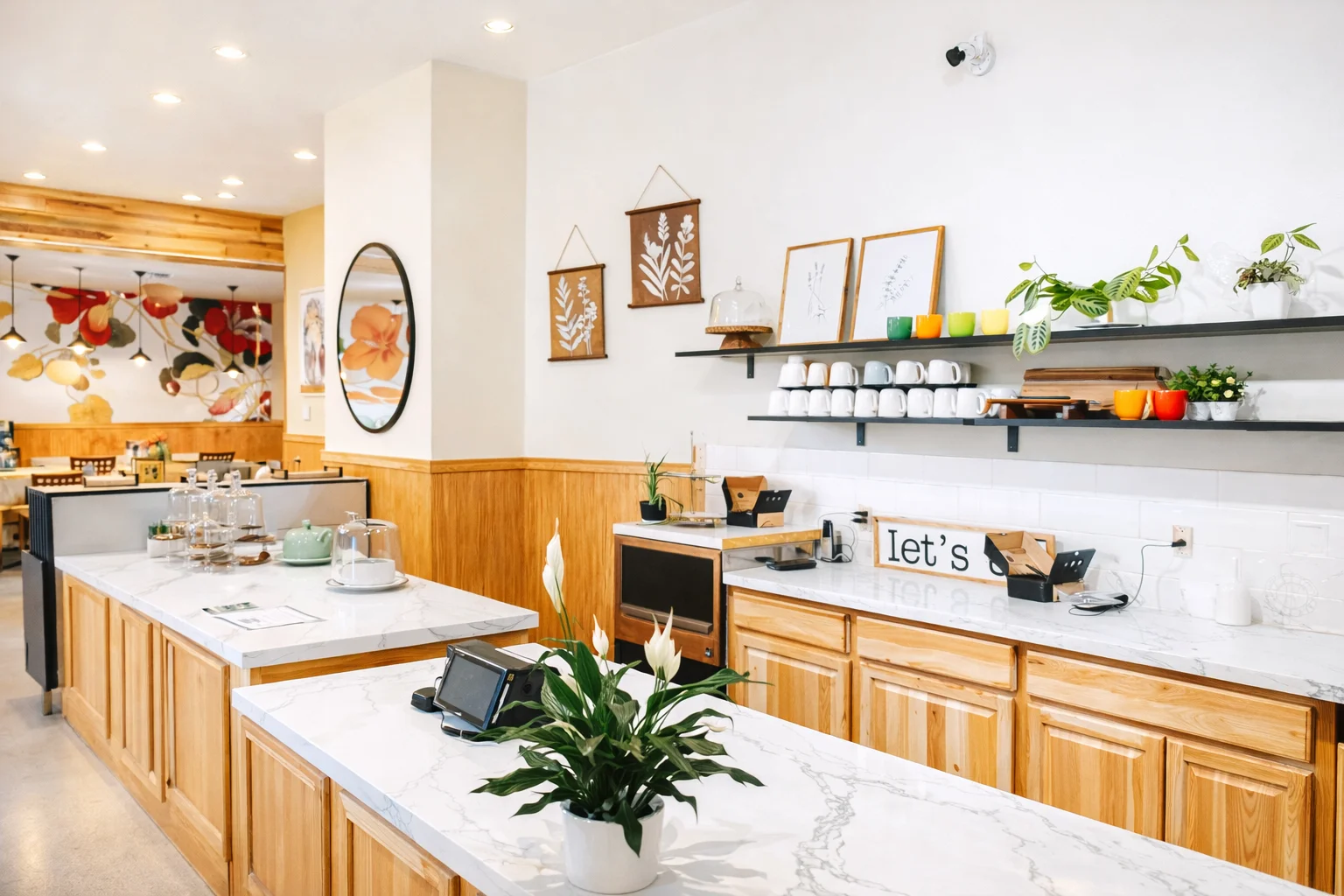
You start looking for a place to cook for your food business, and the same three terms keep showing up.
Shared kitchen. Commissary. Ghost kitchen. Every listing uses them like they mean the same thing, and they don’t.
Pick the wrong one and you either pay for features you’ll never use, or find out too late that your setup doesn’t match what you actually need.
This guide breaks down how each one works, who it’s built for, and how to choose a shared commercial kitchen in Duvall, WA (or anywhere else) that fits your business.
Jump To:
- Detailed Breakdown
- Why These Terms Get Confusing
- What Is a Shared-Use Commercial Kitchen
- How a Shared Kitchen Works Day to Day
- What Is a Commissary Kitchen
- What Is a Ghost Kitchen
- Side-by-Side: Which Is Which
- Which One Fits Your Business
- Questions to Ask Before You Commit
- What to Look for in a Shared Kitchen Near Duvall
- How the Kitchen at Corie’s Cafe Works
- Common Mistakes to Avoid
- Key Takeaways
- FAQs
TLDR – Quick Guide
If you’re comparing options for a shared commercial kitchen in Duvall, WA, here’s the short version:
- A shared-use commercial kitchen is a licensed kitchen you rent by the hour or in recurring blocks
- A commissary is a home base for mobile food businesses like trucks and carts
- A ghost kitchen produces food for delivery-only brands with no storefront
- Caterers, bakers, meal-prep companies, and market vendors usually fit a shared kitchen best
- Ask what’s shared, how booking works, and whether your production methods need approval
You can see how our kitchen works on the commercial kitchen rental page before you reach out.
Detailed Breakdown
Why These Terms Get Confusing
The words overlap because the businesses overlap. A food truck might use a commissary. A caterer might rent a shared kitchen. A delivery brand might operate out of a ghost kitchen that is, technically, also shared.
The easiest way to separate them is to ask one question: what is the kitchen being used for?
- Scheduled production time for your own food business: shared kitchen
- A required base of operations for mobile food: commissary
- Delivery-only food with no dining room: ghost kitchen
Once you know which job you’re hiring the kitchen to do, the rest gets much easier to compare.
What Is a Commissary Kitchen
A commissary is a base of operations, most often for mobile food businesses such as food trucks, carts, and pop-up stands.
It’s where a mobile operator prepares food, stores supplies and equipment, and handles the unglamorous parts of the job like cleaning and waste. Many regulators expect mobile operators to work from an approved commissary, which means this is often a requirement rather than a preference.
Commissary arrangements tend to focus on:
- Storage for supplies and equipment between service days
- Prep space for items that can’t be made on the truck
- A place to handle cleaning, water, and waste properly
- Documentation your regulator may ask for
A shared kitchen can double as a commissary for the right operator, but that depends on the kitchen’s setup and your local rules, so it’s worth asking directly.
What Is a Ghost Kitchen
A ghost kitchen, sometimes called a cloud or virtual kitchen, produces food only for delivery or pickup orders. There’s no dining room and no storefront. Orders come in through delivery apps or a brand’s own website.
Some ghost kitchens are a single operator running several delivery-only brands out of one space. Others are larger buildings with many small kitchen stalls rented to separate businesses.
What defines a ghost kitchen isn’t the equipment. It’s the business model: no walk-in customers, all output aimed at delivery.
That model works well for concepts built around app-based ordering. It’s less useful if your sales come from catering, markets, wholesale, or direct customers.
Side-by-Side: Which Is Which
Shared-Use Commercial Kitchen
- Who it’s for: caterers, bakers, meal prep, private chefs, market and pop-up vendors
- How you use it: scheduled blocks of production time
- What you get: licensed space, shared equipment, optional storage
Commissary
- Who it’s for: food trucks, carts, and other mobile operators
- How you use it: a home base for prep, storage, and cleanup
- What you get: an approved facility, often required by regulators
Ghost Kitchen
- Who it’s for: delivery-only brands and virtual concepts
- How you use it: ongoing production for app and online orders
- What you get: a kitchen with no customer-facing space
Which One Fits Your Business
Here’s how it usually breaks down:
- Catering company: shared kitchen. You need real production space on event days, not a delivery-only setup
- Baker selling at markets or online: shared kitchen. Scheduled blocks line up with your bake days
- Meal-prep business: shared kitchen. Recurring weekly blocks match your cooking and delivery cycle
- Private chef: shared kitchen. You can prep for client dinners without using a client’s kitchen
- Food truck or cart: commissary, and possibly a shared kitchen that can serve as one
- Delivery-only brand: ghost kitchen, or a shared kitchen if you only need scheduled production time
If you fit more than one, that’s normal. Many food businesses start in a shared kitchen because it’s the lowest-commitment way to get licensed, legal production space.
Questions to Ask Before You Commit
Before you sign up anywhere, get clear answers to these:
- What hours and days can I actually book?
- Is the kitchen used by a café or restaurant, and when?
- What equipment is shared, and what do I need to bring?
- How does storage work, and is there a separate cost?
- Are there production methods you restrict, such as strong odors, heavy smoke, or specialized processing?
- What permits, licenses, and insurance do you require before I can cook?
- How far in advance do I need to book?
The restrictions question matters more than most people expect. A kitchen that shares space with a café or other members has to protect everyone’s product and everyone’s schedule.
How the Kitchen at Corie’s Cafe Works
At Corie’s Cafe, we run a licensed shared-use commercial kitchen in Duvall for approved food businesses. We support applicants with applicable permits and can provide the facility information needed for their regulatory approval process.
- Recurring weekly production blocks, typically four to six hours
- Hourly reservations for one-time or extra time, subject to availability
- Scheduled outside café service hours
- Designed for up to three kitchen workers at a time
- Shared equipment, with storage available as an add-on and scheduled in advance
Every applicant is reviewed for fit, licensing, equipment, storage, and how their production works alongside the café. Certain production methods need advance approval.
You can read more on our commercial kitchen rental page or send us a quick inquiry and tell us what you make.
Common Mistakes to Avoid
When choosing between a shared kitchen, a commissary, and a ghost kitchen, avoid these mistakes:
- Assuming the three terms mean the same thing and booking the wrong one
- Picking on price alone without checking schedule, storage, and rules
- Skipping the question about restricted production methods
- Not confirming which permits and insurance the kitchen requires
- Waiting until you need production time to start the application
- Choosing a ghost kitchen when your sales come from catering or markets
A few minutes of homework up front saves weeks of backtracking later.
Key Takeaways
Choosing the right kitchen type comes down to how your business actually sells.
- Shared kitchens are for scheduled production time
- Commissaries are home bases for mobile food operators
- Ghost kitchens are built for delivery-only brands
- Most caterers, bakers, and meal-prep businesses fit a shared kitchen
- Always ask about rules, restrictions, and storage before you book
Get the match right and the kitchen stops being a problem to solve and starts being a tool that helps you grow.